Professional Research
Sync Labs
As a Research Scientist at Sync Labs, I focus on building robust, efficient and state-of-the-art models for zero-shot video editing, lip-sync generation, and speech-driven facial animation. I work with flow-matching architectures, with a specific focus on optimizing inference efficiency, improving visual quality, and developing rigorous evaluation metrics for generative video. I also work on video super-resolution, TTS models, speech editing and language modeling.
Key Innovations & Highlights
🎬 Audio-Conditioned Lip-Syncing & Motion Transfer
Generative Synchronization
Developed industry-standard lip-sync systems using multimodal language models and Flow-Matching algorithms.
Motion Transfer & Extraction
Engineered robust pipelines for cross-video facial motion transfer, keybody extraction, and precise landmark tracking.
Speech & TTS Integration
Integrated conditioning into complex TTS models and interactive speech-editing workflows for pixel-perfect frame alignment.
📺 Next-Gen Video Super-Resolution (VSR) & Pixel Space Generation
Hybrid Generative VSR
Pioneered SOTA Video Super-Resolution models combining LLM-based Transformers, GANs, and Flow-Matching frameworks.
Pixel-Based Flow Matching
Investigated direct pixel-space flow matching architectures to bypass compression limits, eliminate VAE decoding artifacts, and unlock higher spatial fidelity for realistic video synthesis.
Reference-Guided Enhancement
Designed reference-frame-based VSR methods to preserve temporal consistency and fine texture details across frames.
Production-Grade Infrastructure
Built architectures engineered specifically for ultra-high-bitrate production formats (ProRes, EXR, etc.) and high-frame-rate master pipelines.
⚡ High-Efficiency & Low-Latency Inference
Advanced Distillation
Applied Advanced LoRA Distillation techniques to achieve drastically reduced step counts while maintaining visual fidelity.
Sampling & Latency Optimization
Utilized progressive flow matching, exploited sparsity, and developed specialized runtime techniques to minimize memory footprints and enable near-real-time generation.
Samsung Research
I worked with the AI Camera Team of Visual Intelligence Division at Samsung R&D Institute India, Bangalore (SRI-B), where I developed and optimized deep learning models for action recognition on edge devices. These models have been integrated into Samsung's flagship Galaxy S24 series in its Single Take feature.
Key Innovations & Highlights
Commercial Deployment
Using Single Video frames - Commercialized in Samsung's flagship Galaxy S24.
Patent Filed
Developed a Semi-Supervised framework with Progressive Pseudo-labeling for Animal Facial Action Recognition - Patent Filed (SRIB-20240130-007).
Tata Motors
I worked at the Application Engineering and also at Brake Department at the Engineering Research Center (ERC) of Tata Motors. I developed a comprehensive toolkit to analyse vehicle stability when subjected to various driving conditions and application components. I also developed an automated brake thermal analysis software for identifying potential brake issues during extreme driving scenarios.
Academic Research
PhD Thesis
Development of Resource-efficient architectures for computer vision such as image classification, semantic segmentation, image super-resolution, image inpainting and developing efficient evaluation metrics for generative models.
Award: Naik and Rastogi Award for Excellence in Ph.D. Research (2024–2026), awarded by IIT Bombay (formerly the Best PhD Thesis Award).
Key Innovations & Highlights
Wavelet-Based Architectures
Conceptualized and created WaveMix, WavePaint, and WaveMixSR, leveraging 2D-discrete wavelet transforms for superior performance in image classification, semantic segmentation, image super-resolution and image inpainting. These architectures deliver high performance with reduced computational requirements, outperforming state-of-the-art models.
Generative Evaluation Metrics
Designed normalizing flow-based evaluation metrics, FLD, FLD+, and RL2, which ensure monotonic behavior and deliver reliable estimates using significantly fewer real and synthetic images.
X-Former Architectures
Developed Hybrid X-Formers and Convolutional X-Formers, which integrate image-specific inductive biases, significantly improving performance with limited data and GPU resources.
M.Tech Thesis
Design and control of a lower extremity exoskeleton for rehabilitation.
Developed a functional 6-DOF active lower-extremity exoskeleton prototype and control pipeline designed to aid lower-body motor rehabilitation.
Key Innovations & Highlights
Biomechanical Mechanism Design
Designed an optimized 4-bar linkage mechanism for the hip joint (via 3-point analytical synthesis and Genetic Algorithms) and an offset revolute joint for the knee. This design accurately accounts for the shifting instantaneous center of rotation in biological joints.
Passive Gravity Balancing
Implemented zero-free-length spring balancing to make the exoskeleton's potential energy invariant across gait configurations, significantly reducing motor torque requirements during the swing phase.
Sensor Fusion & Gait State Estimation
Built a custom foot-pressure array using FlexiForce ground-reaction sensors. Trained an Artificial Neural Network (ANN) to map ground reaction forces directly to joint angular trajectories for adaptive, state-based motor control.
End-to-End Prototyping & Validation
Modeled and stress-tested (FEA) the structure in Autodesk Inventor, fabricated the custom aluminum frame via water-jet cutting, and experimentally validated real-time trajectory tracking on human subjects.
Recent Publications
Scroll through my recent research publications. Click on any paper to learn more.
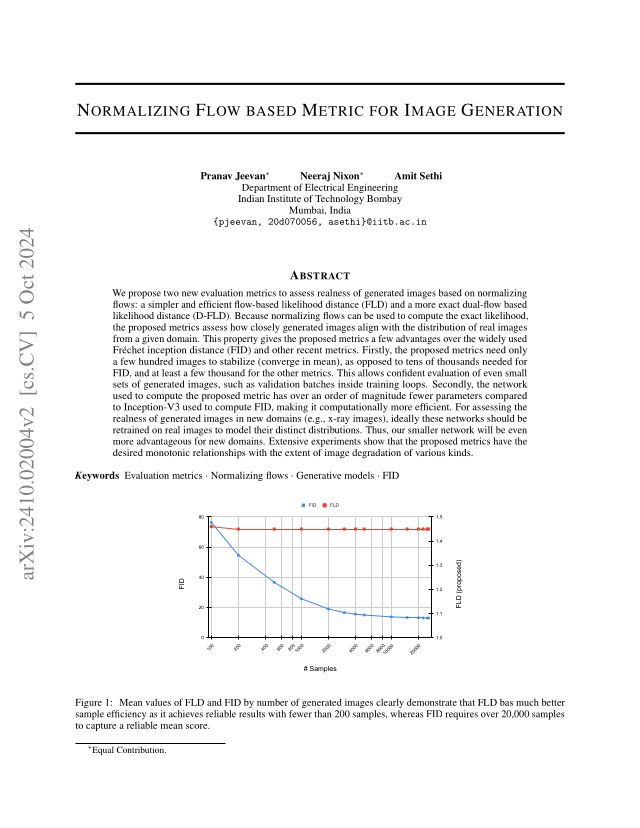
Normalizing Flow Based Metric for Image Generation
2026
ICML 2026
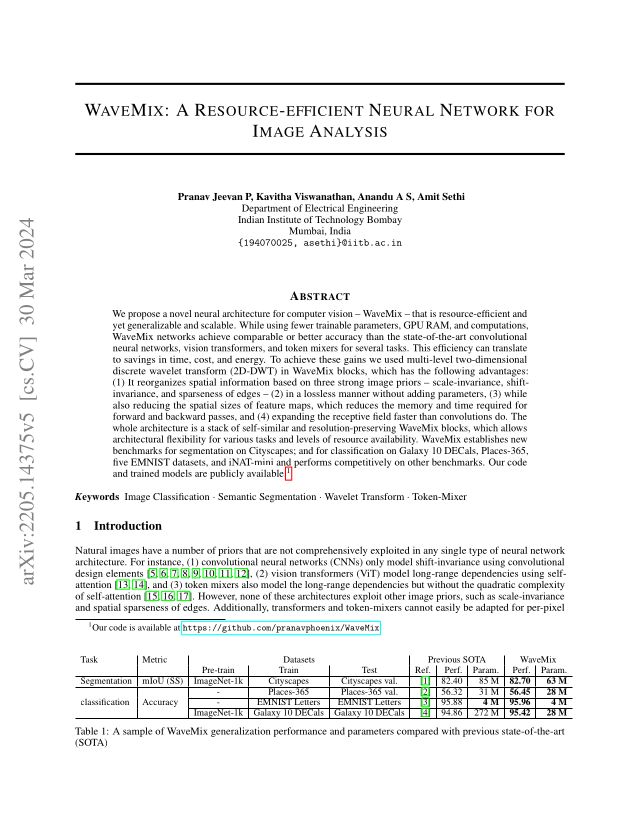
WaveMix: A Resource-efficient Neural Network for Image Analysis
2026
ICML 2026
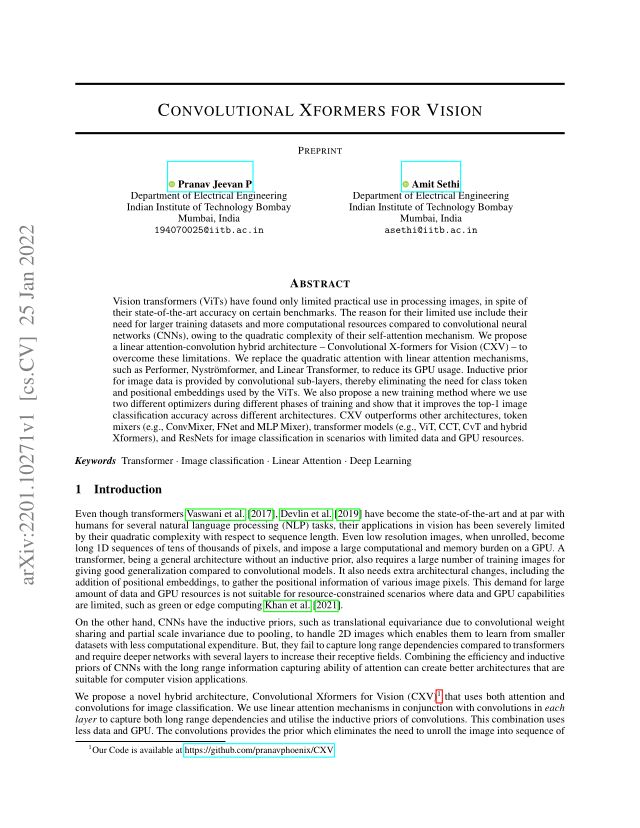
Convolutional Xformers for Vision
2026
ICML 2026
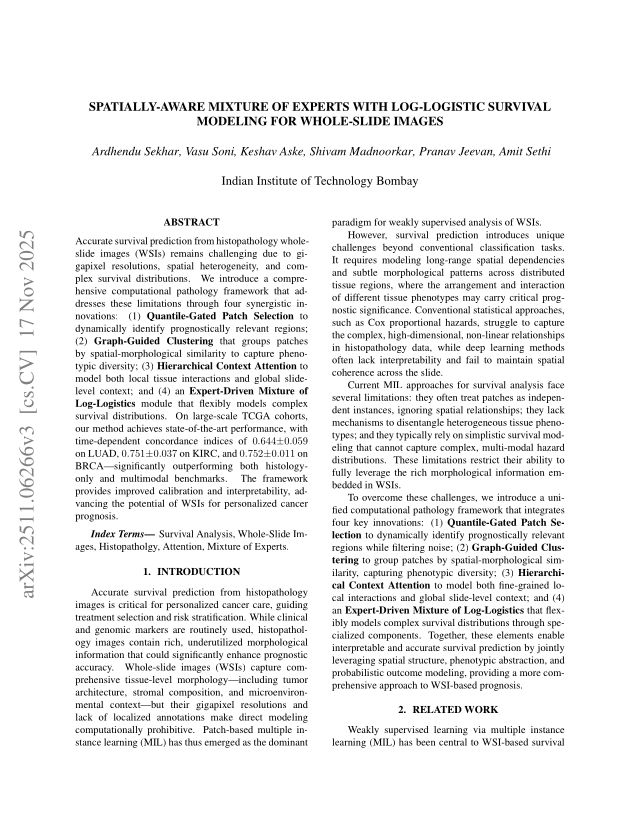
Spatially-Aware Mixture of Experts with Log-Logistic Survival Modeling for Whole-Slide Images
2026
ISBI 2026
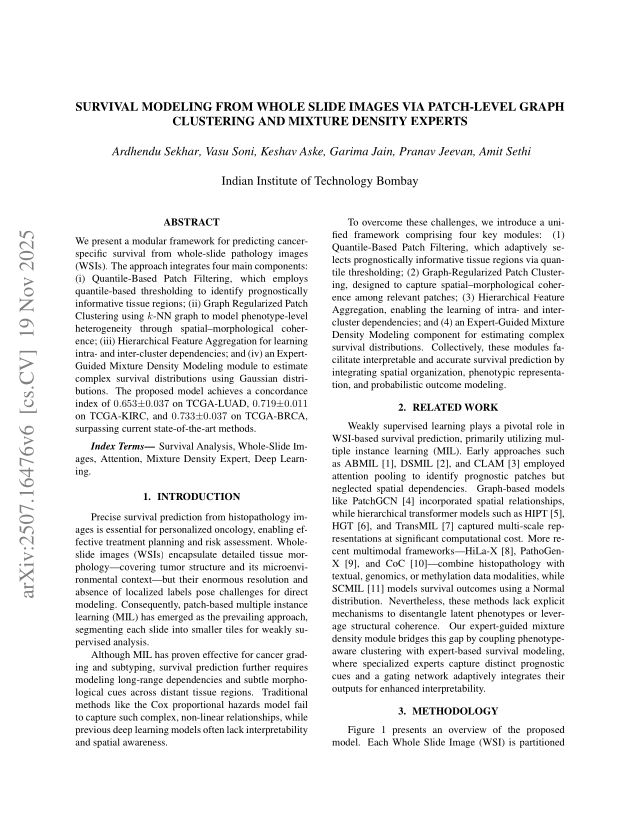
Survival Modeling from Whole Slide Images via Patch-Level Graph Clustering and Mixture Density Experts
2026
ISBI 2026
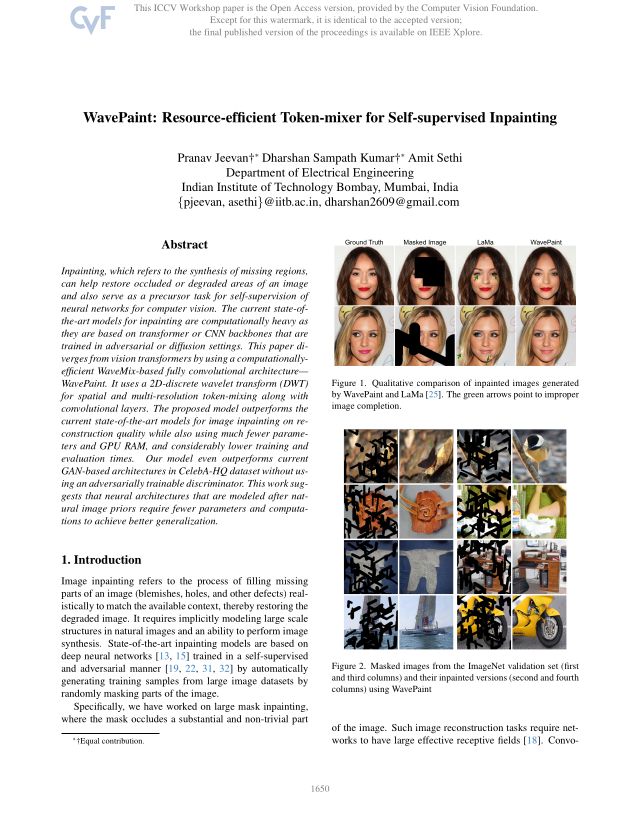
WavePaint: Resource-efficient Token-mixer for Self-supervised Inpainting
2025
ICCV 2025
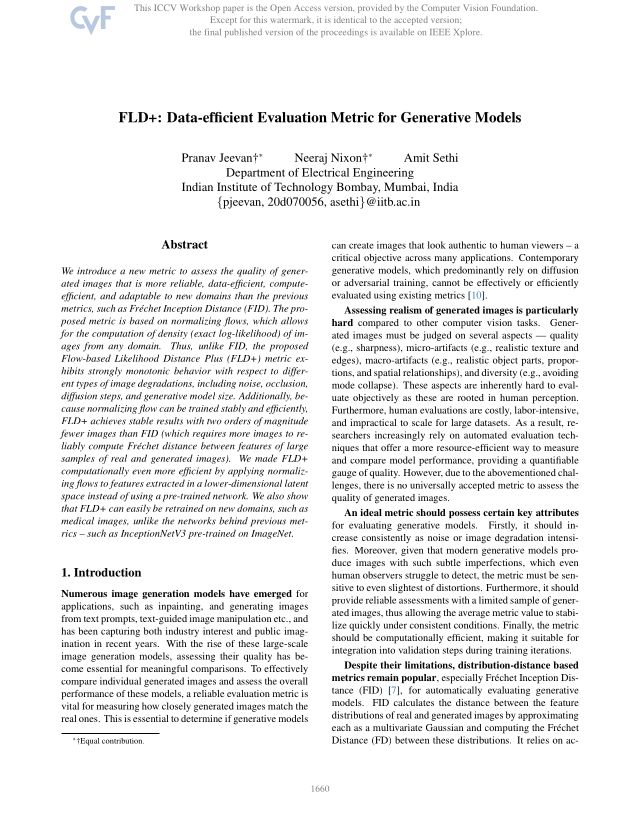
FLD+: Data-efficient Evaluation Metric for Generative Models
2025
ICCV 2025
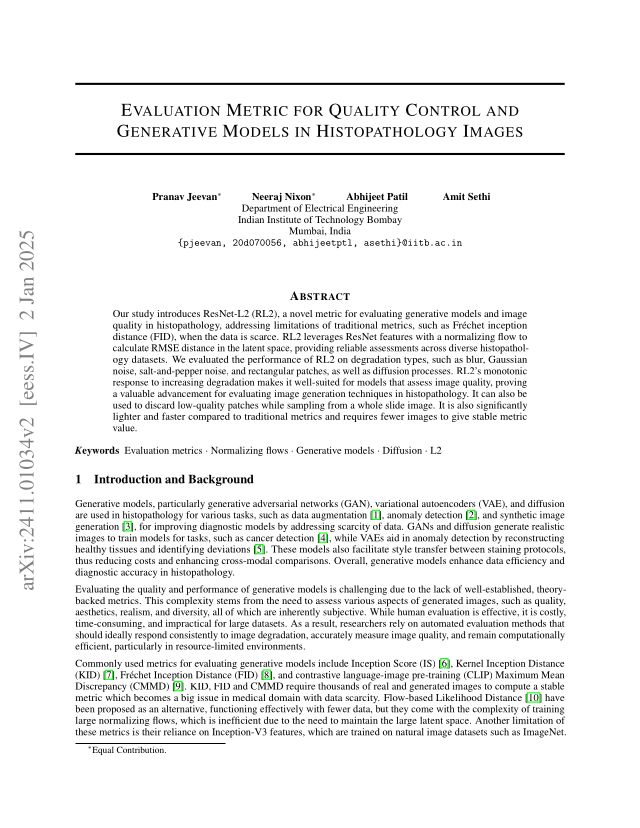
Evaluation Metric for Quality Control and Generative Models in Histopathology Images
2025
ISBI 2025
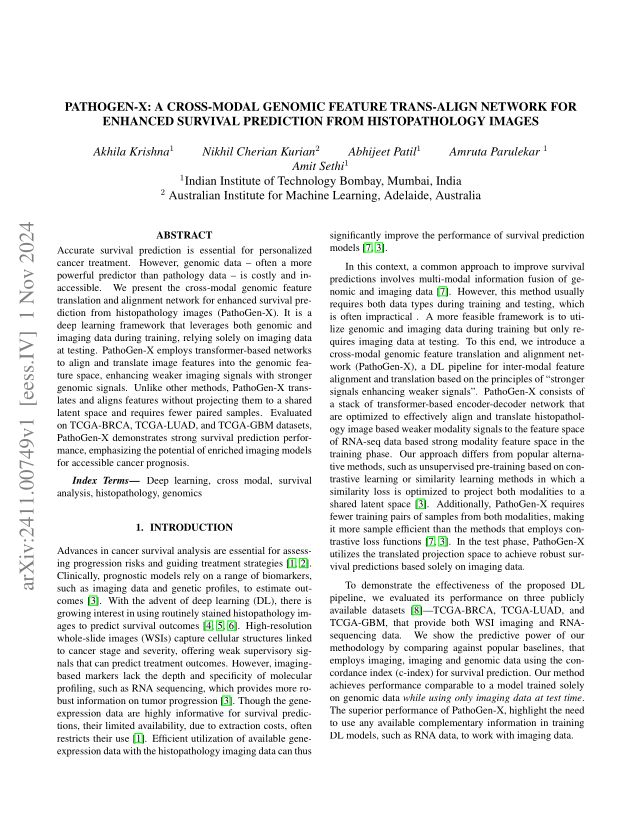
PathoGen-X: A Cross-Modal Genomic Feature Trans-Align Network for Enhanced Survival Prediction from Histopathology Images
2025
ISBI 2025
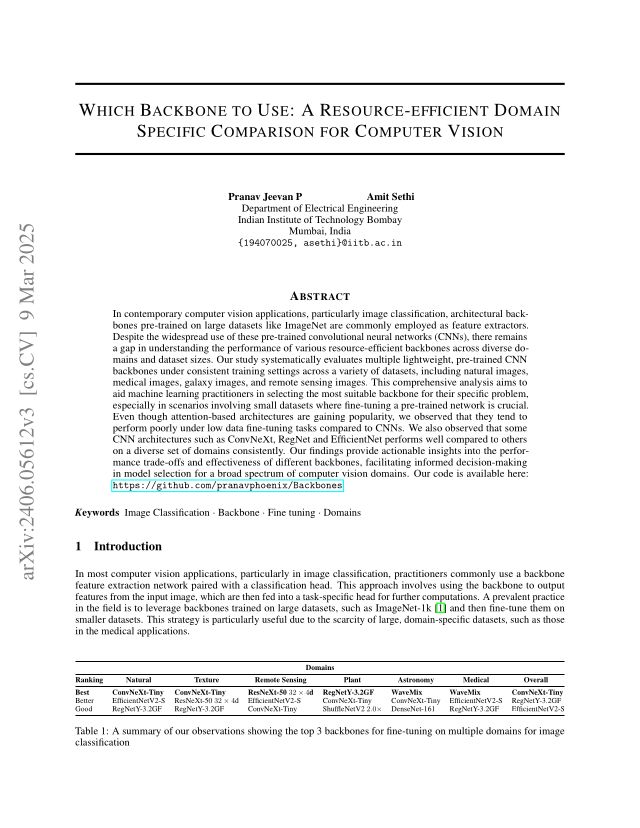
Which Backbone to Use: A Resource-efficient Domain Specific Comparison for Computer Vision
2025
TMLR
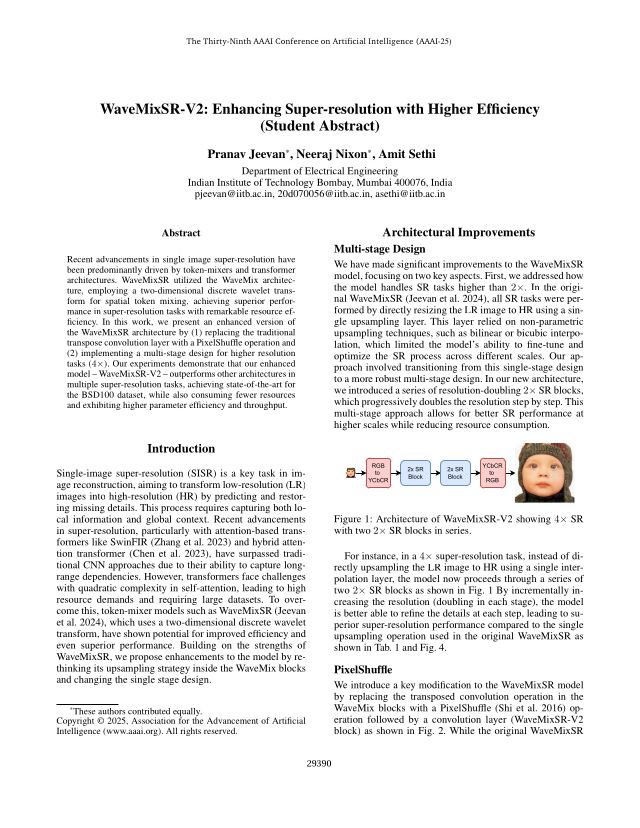
WaveMixSR-V2: Enhancing Super-resolution with Higher Efficiency
2025
AAAI 2025
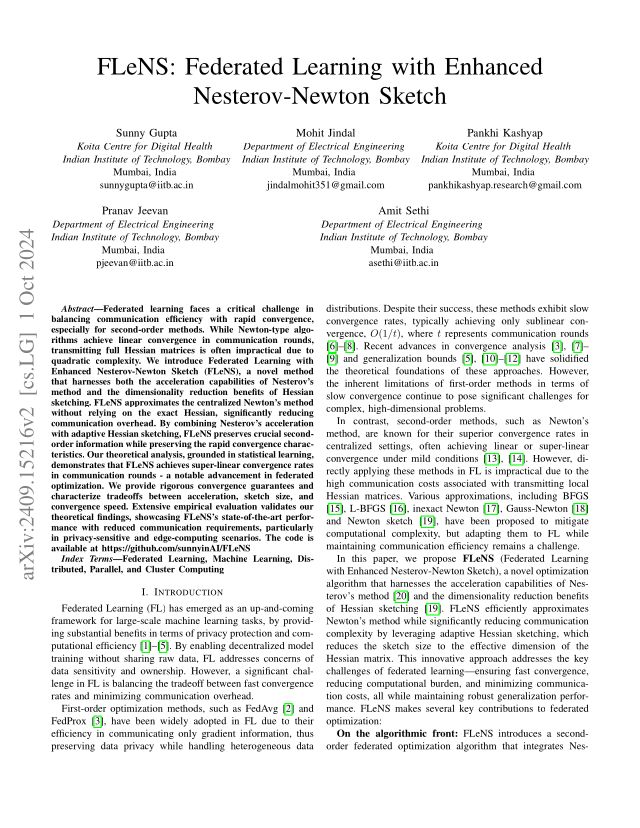
FLeNS: Federated Learning with Enhanced Nesterov-Newton Sketch
2024
IEEE BigData 2024
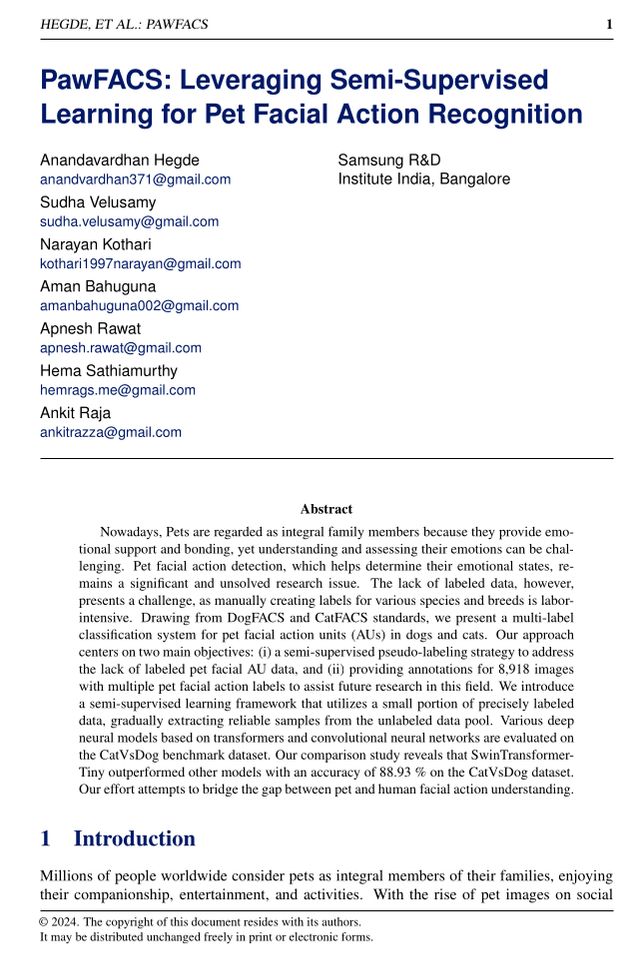
PawFACS: Leveraging Semi-Supervised Learning for Pet Facial Action Recognition
2024
BMVC 2024
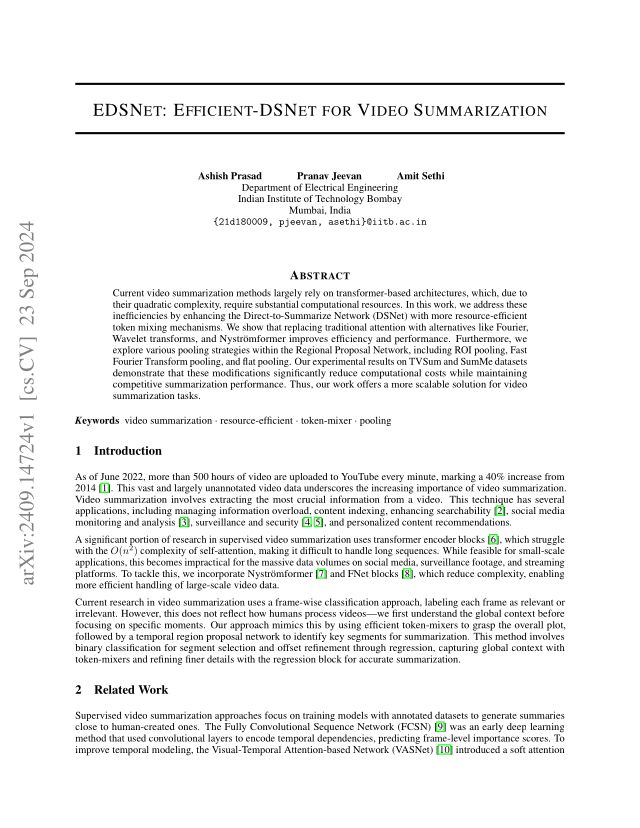
EDSNet: Efficient-DSNet for Video Summarization
2024
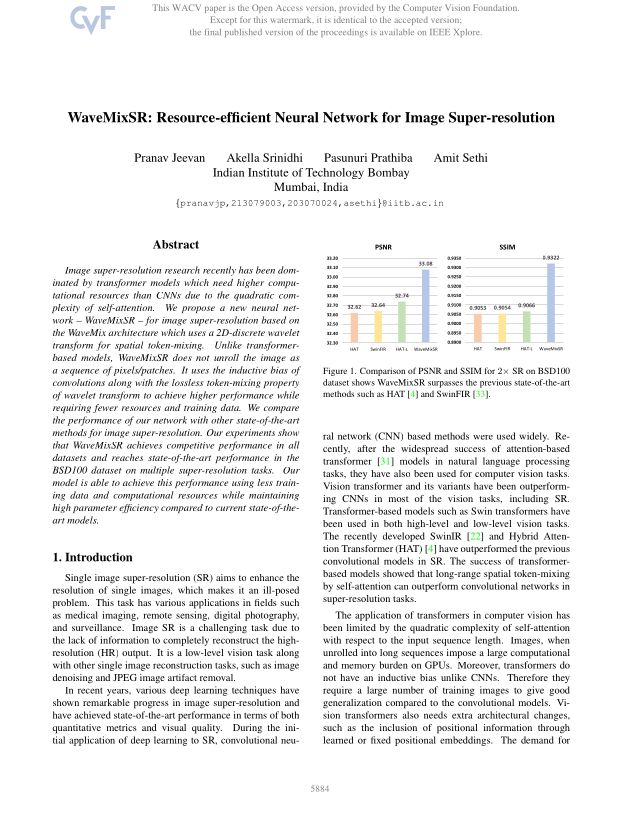
WaveMixSR: A Resource-efficient Neural Network for Image Super-resolution
2024
WACV 2024
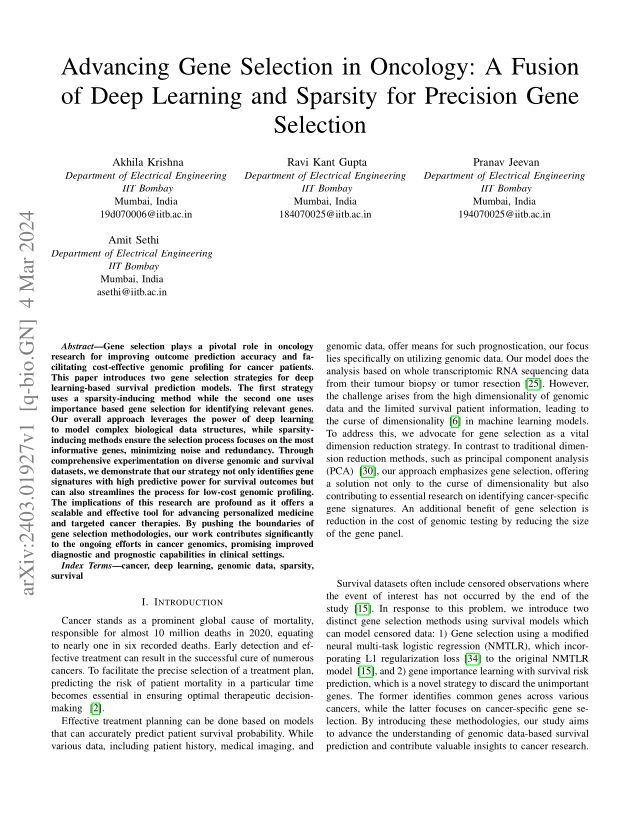
Advancing Gene Selection in Oncology: A Fusion of Deep Learning and Sparsity for Precision Gene Selection
2024
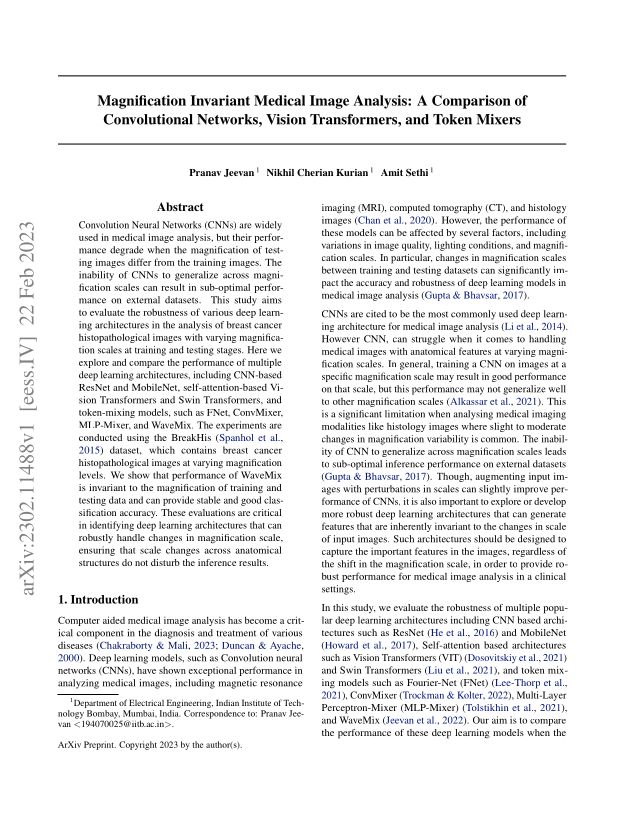
Magnification Invariant Medical Image Analysis: A Comparison of Convolutional Networks, Vision Transformers, and Token Mixers
2024
BIOSTEC 2024
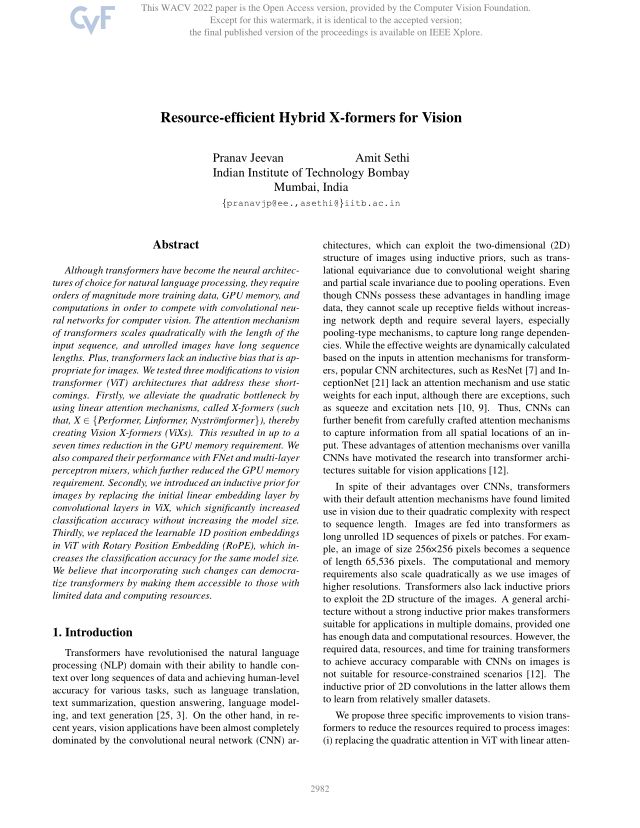
Resource-Efficient Hybrid X-Formers for Vision
2022
WACV 2022
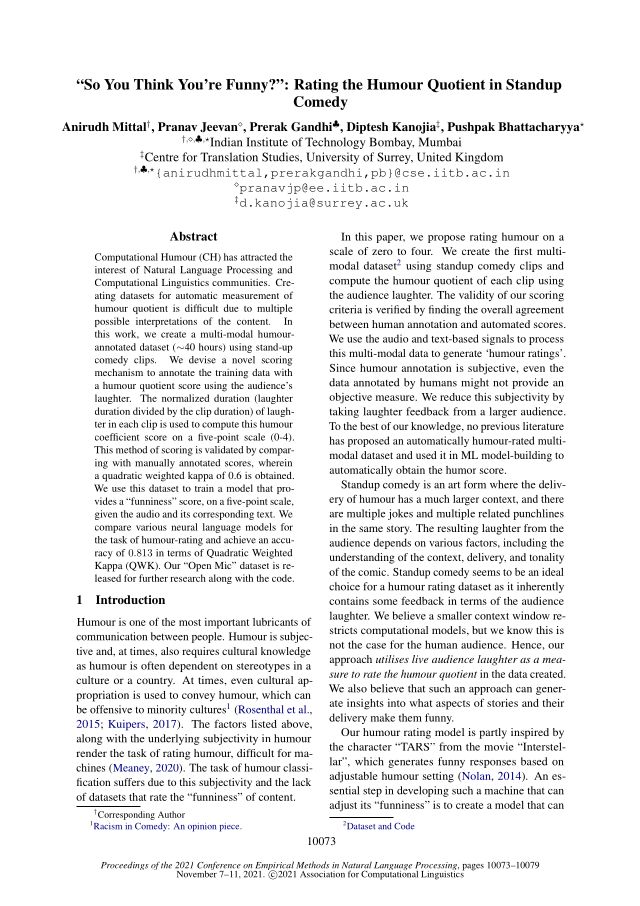
“So You Think You’re Funny?”: Rating the Humour Quotient in Standup Comedy
2021
EMNLP 2021
Normalizing Flow Based Metric for Image Generation
2026
ICML 2026
WaveMix: A Resource-efficient Neural Network for Image Analysis
2026
ICML 2026
Convolutional Xformers for Vision
2026
ICML 2026
Spatially-Aware Mixture of Experts with Log-Logistic Survival Modeling for Whole-Slide Images
2026
ISBI 2026
Survival Modeling from Whole Slide Images via Patch-Level Graph Clustering and Mixture Density Experts
2026
ISBI 2026
WavePaint: Resource-efficient Token-mixer for Self-supervised Inpainting
2025
ICCV 2025
FLD+: Data-efficient Evaluation Metric for Generative Models
2025
ICCV 2025
Evaluation Metric for Quality Control and Generative Models in Histopathology Images
2025
ISBI 2025
PathoGen-X: A Cross-Modal Genomic Feature Trans-Align Network for Enhanced Survival Prediction from Histopathology Images
2025
ISBI 2025
Which Backbone to Use: A Resource-efficient Domain Specific Comparison for Computer Vision
2025
TMLR
WaveMixSR-V2: Enhancing Super-resolution with Higher Efficiency
2025
AAAI 2025
FLeNS: Federated Learning with Enhanced Nesterov-Newton Sketch
2024
IEEE BigData 2024
PawFACS: Leveraging Semi-Supervised Learning for Pet Facial Action Recognition
2024
BMVC 2024
EDSNet: Efficient-DSNet for Video Summarization
2024
WaveMixSR: A Resource-efficient Neural Network for Image Super-resolution
2024
WACV 2024
Advancing Gene Selection in Oncology: A Fusion of Deep Learning and Sparsity for Precision Gene Selection
2024
Magnification Invariant Medical Image Analysis: A Comparison of Convolutional Networks, Vision Transformers, and Token Mixers
2024
BIOSTEC 2024
Resource-Efficient Hybrid X-Formers for Vision
2022
WACV 2022
“So You Think You’re Funny?”: Rating the Humour Quotient in Standup Comedy
2021
EMNLP 2021